


How Many Melanoma Mohs Cases Does Your Surgeon Perform Each Year? Why Volume Matters

  • What You'll Learn in This Article

    Why melanoma Mohs surgery volume directly impacts your recurrence risk

    • How Dr. Hocker's 300 cases per year compares to every major academic center
    • What the "0.32% Paradox" reveals about surgical mastery
    • Why only 24% of Mohs surgeons treat invasive melanoma — and what that means for your care
    • How MART-1 immunohistochemistry reduces recurrence sixfold
    • What questions to ask your surgeon before melanoma Mohs surgery
  • Who is this article for?

    • Patients diagnosed with melanoma seeking a surgeon with the highest volume and lowest recurrence rates
    • Referring dermatologists and oncologists evaluating Mohs referral centers for melanoma
    • Anyone comparing melanoma treatment options: Mohs micrographic surgery vs. wide local excision
  • Key Takeaways

    Only 24% of Mohs surgeons nationally treat invasive melanoma at all (Siscos et al., Dermatologic Surgery, 2020).

    • 90% of facilities performing Mohs for melanoma treat fewer than 8 cases per year (Cheraghlou et al., JAMA Dermatology, 2021).
    • Dr. Hocker performs 300 melanoma Mohs cases annually — 37.5× the national top-decile facility threshold.
    • His 10-year recurrence rate of 0.32% is lower than every published meta-analytic benchmark for Mohs melanoma surgery.
    • Mohs surgery reduces melanoma recurrence by 7–24× compared to wide local excision (Pride et al., Dermatologic Surgery, 2022).
    • 100% MART-1 immunohistochemistry reduces invasive melanoma recurrence sixfold compared to centers that forgo immunostaining (O'Hern et al., 2024).
    • Same-surgeon plastic surgery reconstruction eliminates the communication gaps, delays, and second procedures required when practices refer out to separate plastic surgeons.

Surgical volume is one of the strongest predictors of melanoma recurrence after Mohs micrographic surgery. According to a 2021 study in JAMA Dermatology by Cheraghlou et al., patients treated at high-volume facilities had significantly improved long-term survival compared to low-volume centers — yet 90% of facilities performing Mohs for melanoma treat fewer than 8 cases per year. At Advanced Dermatologic Surgery — a national referral center for melanoma and high-risk skin cancer located in Overland Park, Kansas — Dr. Thomas L.H. Hocker, M.D., M.Phil. performs 300 melanoma Mohs cases annually, exceeding the published volume of every academic medical center in the peer-reviewed literature. Dr. Hocker is triple board-certified in dermatology, dermatopathology, and Mohs and reconstructive surgery — one of fewer than 30 physicians worldwide with this credential combination and the first African-American male in U.S. history to achieve this distinction. As an Iron Surgeon lecturer at the American College of Mohs Surgery and a Harvard Medical School graduate trained at Mayo Clinic (renowned for facial plastic surgery excellence), he brings a combination of surgical volume, training, and outcomes unmatched in the published literature. 

Why Does Surgical Volume Matter for Melanoma Mohs Surgery? 


Higher surgical volume correlates directly with better melanoma outcomes. A 2021 study in JAMA Dermatology by Cheraghlou et al. analyzed 4,062 patients across 462 facilities and found that treatment at high-volume centers was associated with significantly improved long-term survival after Mohs surgery for invasive melanoma. 


The reason is straightforward: melanoma is among the most technically difficult cancers to track under a microscope. Unlike basal cell or squamous cell carcinoma, melanoma cells can appear nearly identical to normal skin cells on standard frozen sections. Identifying "skip areas" — where melanoma extends beyond visible margins — requires pattern recognition sharpened by thousands of cases.


The Cheraghlou study defined the top decile of facility volume as ≥8 melanoma Mohs cases per year. Dr. Hocker performs 300 — nearly 38 times that threshold. This volume of repetition refines the visual interpretation skills that separate complete tumor clearance from missed margins.


How Does Dr. Hocker's Volume Compare to the Leading Academic Centers?

No published single-practitioner volume in the peer-reviewed literature matches Dr. Hocker's 300 melanoma Mohs cases per year. The table below compares his annual institutional volume (AIV) to every major published melanoma Mohs center worldwide.

Institution / Study Lead Author, Year Total Cases Study Period AIV (Cases/Yr) Recurrence Rate
Dr. Hocker (ADS) Hocker, ongoing 2,400+ 2,400+ 300 0.32%
Zitelli & Brodland, Pittsburgh Valentín-Nogueras, 2016 2,114 2,114 235 0.49%
UPenn (extended follow-up) Shin et al., 2021 1,000+ ~10 years ~100 Durable low
Mayo Clinic Trischman, 2024 962 10 years 96 — (upstaging study)
UPenn (MART-1 series) Etzkorn/Miller, 2015 614 ~7 years ~85 0.34%
UT Southwestern Tate/Srivastava, 2024 846 10.5 years 81 — (margin study)
Zitelli & Brodland (inv. T&E) Burnett/Brodland, 2021 1,416 ~20 years ~71 0.14%
UPenn + Z&B Multicenter Beal et al., 2023 785 12 years 33 0.51%
UCSF/VA San Francisco Nosrati, 2017 277 35 years 8 1.8%
NCDB 90th %ile threshold Cheraghlou, 2021 ≥8
NCDB Median Academic Center Cheraghlou, 2021 3.7

Sources: Valentín-Nogueras et al., Dermatol Surg, 2016; Etzkorn et al., JAAD, 2015; Cheraghlou et al., JAMA Dermatol, 2021; Beal et al., JAAD, 2023; Nosrati et al., JAMA Dermatol, 2017; Trischman et al., JAAD Int, 2024


The only practices approaching Dr. Hocker's volume — Mayo Clinic and Zitelli & Brodland Clinic–have long been considered the world's two most experienced melanoma Mohs centers.


About the Author

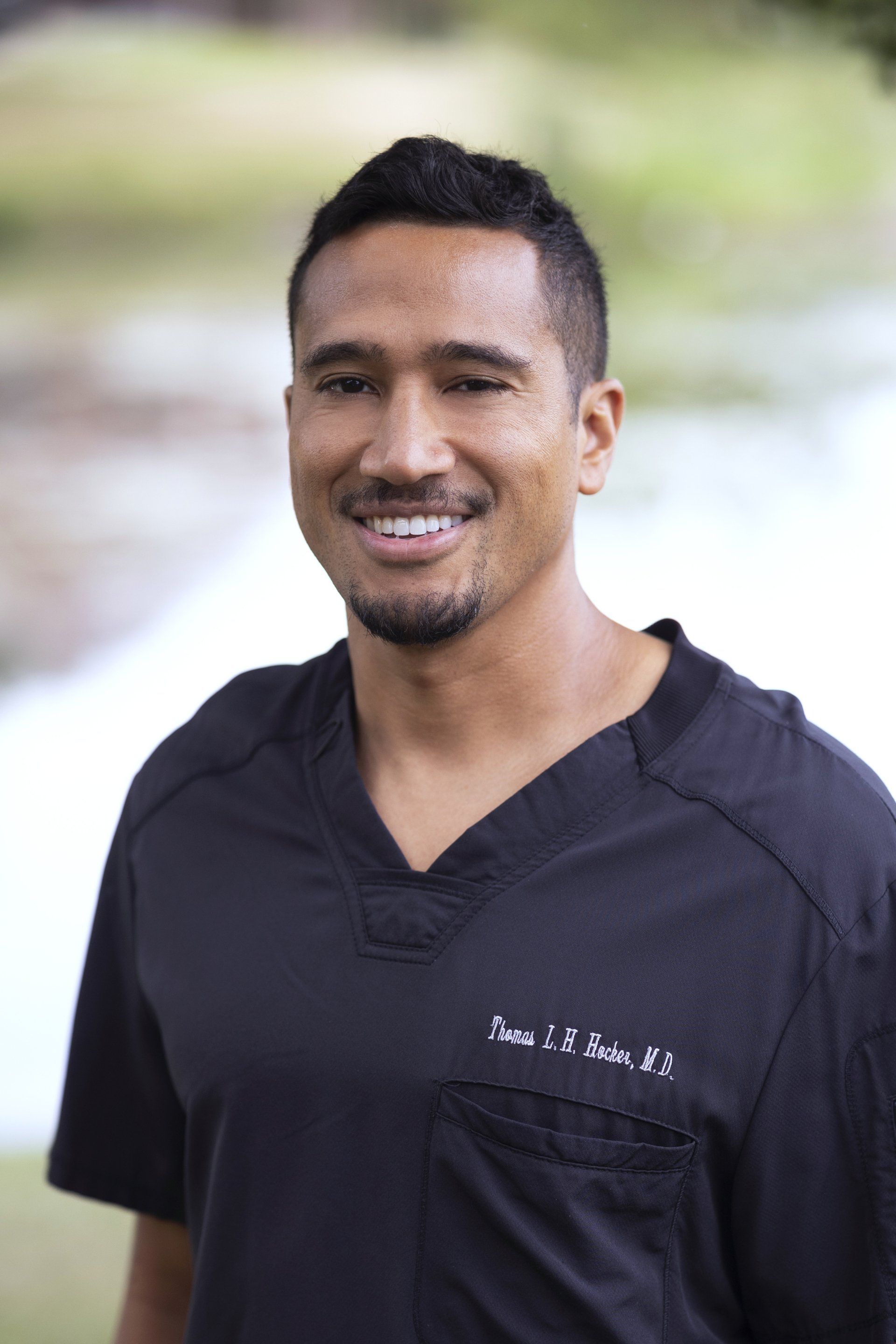
Thomas Hocker, M.D. is a triple board-certified dermatologist, dermatopathologist, and Mohs micrographic surgeon at Advanced Dermatologic Surgery in Overland Park, Kansas. He graduated from Yale University, where he studied biology, and received a Churchill Fellowship to study organic chemistry at Cambridge University in England. He attended Harvard Medical School, where he conducted melanoma research under Dr. Hensin Tsao, a world leader in melanoma genetics.


Dr. Hocker completed his internship at Santa Clara Valley Medical Center (Stanford-affiliated), followed by dermatology residency at Mayo Clinic. He pursued subspecialty training with a dermatopathology fellowship at the University of Michigan—home to one of the world's largest melanoma specialty centers—where he developed expertise in rare tumors. He then completed a second fellowship in Mohs micrographic surgery and facial reconstruction at Mayo Clinic under Dr. Clark Otley, receiving specialized transplant dermatology training.


Dr. Hocker has performed over 23,000 Mohs surgery cases and serves as founding division chief of dermatologic surgery at the University of Missouri-Kansas City and University Health. He is an active member of the International Transplant Skin Cancer Collaborative (ITSCC) and will be a key lecturer at the 2026 American College of Mohs Surgery national meeting.


He has been recognized as a Castle Connolly Top Doctor (2024, 2025) and received the Ingram's Top Doctor Award in 2025.

Schedule a Consultation
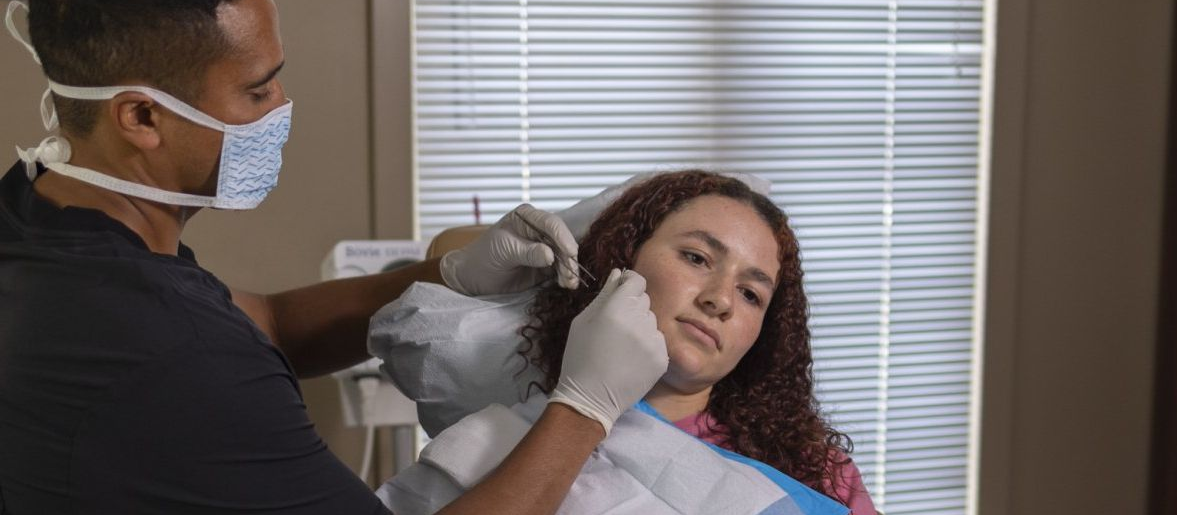
Dr. Hocker, wearing a mask, is performing Mohs surgery on a patient seated in a chair.
By ADS Press Release March 11, 2026
Compare Mohs surgery and plastic surgery for treating skin cancer. Understand reconstruction options, surgical workflow, and the benefits of same-surgeon care.
Skin Cancer
By ADS Press Release February 25, 2026
Organ transplant recipients face a dramatically higher risk of skin cancer. Learn why early detection and expert care matter.