Do Mohs Surgeons or Plastic Surgeons Perform Better Facial Reconstruction After Skin Cancer Removal?
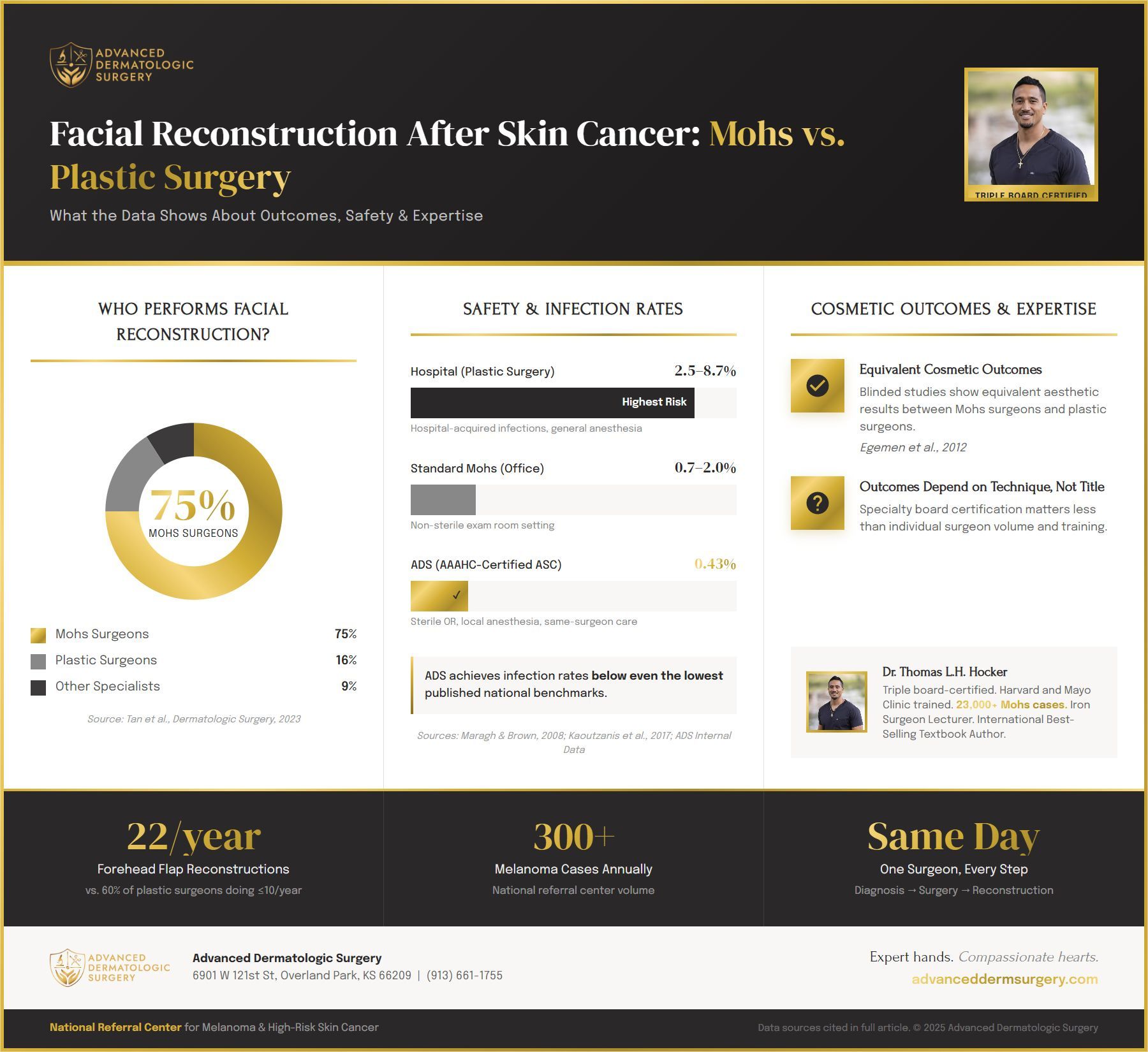
Mohs micrographic surgeons perform approximately 75% of all facial reconstructive procedures in the United States and achieve infection rates five to eight times lower than hospital-based surgery. According to
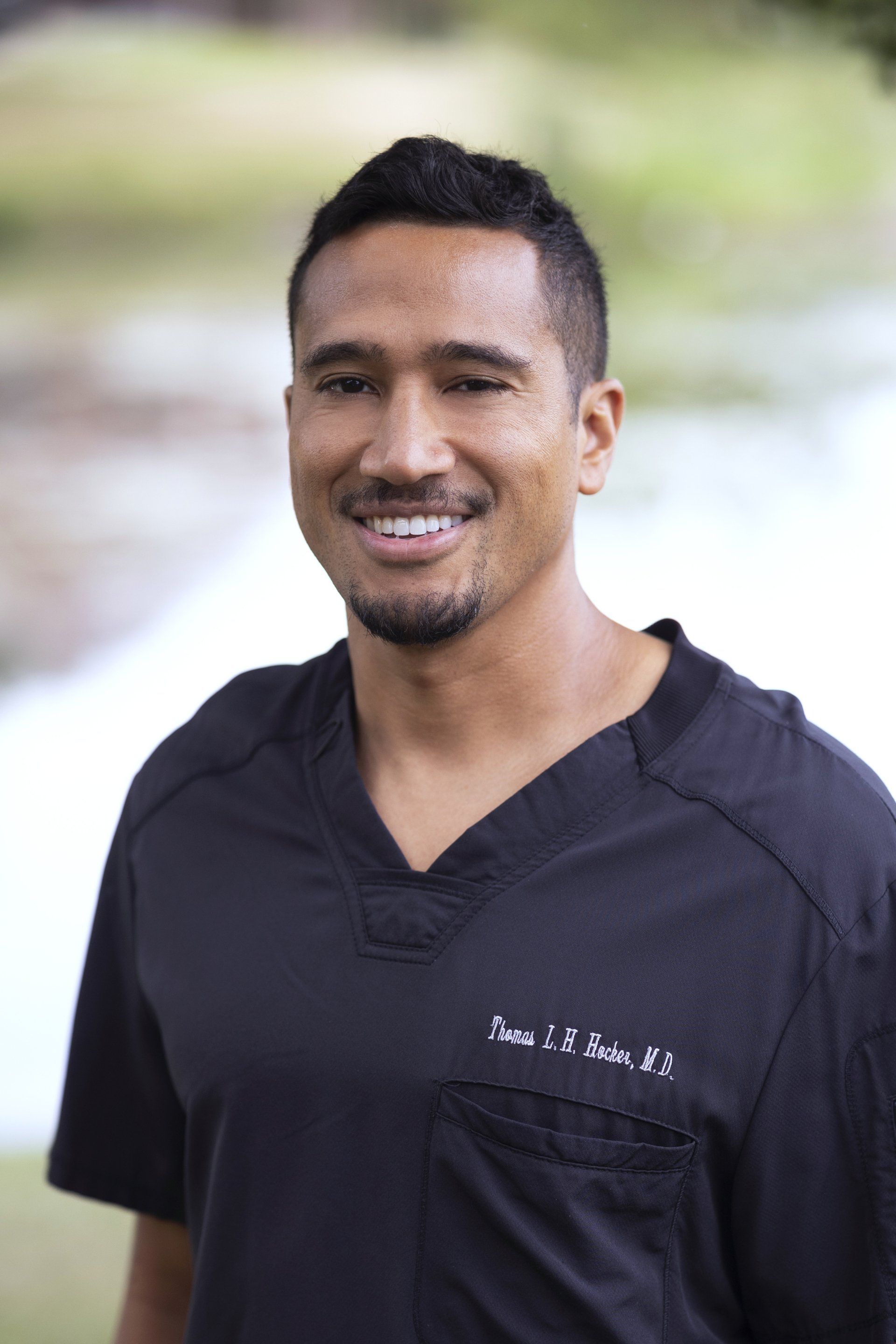
Dr. Thomas L. Hocker, M.D., M.Phil., a triple board-certified Mohs surgeon at
Advanced Dermatologic Surgery, a national referral center for melanoma and high-risk skin cancer in Overland Park, Kansas, surgical outcomes are driven primarily by procedure volume rather than specialty title. Mohs surgeons perform facial repairs daily, often completing 10–15 facial reconstructions per day.
This analysis reviews Medicare data, infection rate studies, and blinded cosmetic outcome trials to address a common patient question:
Should facial reconstruction be performed by the Mohs surgeon, or should patients be referred to a plastic surgeon?
Who This Article Is For
- Patients diagnosed with facial skin cancer who are evaluating reconstruction options
- Individuals seeking to understand differences between Mohs and plastic surgery reconstruction
- Referring physicians assessing appropriate reconstruction pathways for their patients
Key Takeaways
- Mohs surgeons perform
75.3% of all facial reconstructive procedures in cosmetically sensitive areas, based on 2023 Medicare data.
- Published Mohs surgery infection rates range from 0.7% to 2.0%, depending on anatomic site and risk factors. Hospital-based procedures report infection rates between 2.5% and 8.7%.
- Advanced Dermatologic Surgery maintains an infection rate of 0.43% by performing reconstructions in an
AAAHC-certified ambulatory surgery center under sterile operating room conditions and local anesthesia.
- Dr. Hocker performs 22 paramedian forehead flaps annually, more than double the volume of most facial plastic surgeons.
- Blinded studies demonstrate no statistically significant difference in cosmetic outcomes between Mohs surgeons and plastic surgeons for facial reconstruction.
- Same-day reconstruction by the excising surgeon reduces information loss, lowers wound-care burden, and decreases the total cost of care.
Who Performs the Majority of Facial Reconstruction in the United States?
A
2023 Medicare analysis found that Mohs surgeons performed 75.3% of all cutaneous reconstructions in cosmetically and functionally sensitive areas, including the face, ears, nose, lips, and eyelids. Earlier Medicare data from 2004–2009 showed dermatologic surgeons accounted for:
- 75.1% of complex repairs
- 60.8% of intermediate repairs
- 55.5% of local tissue rearrangements
- 57.5% of full-thickness skin grafts
Why Surgical Volume Matters
The volume–outcome relationship is well established in surgical literature. Surgeons who perform procedures more frequently demonstrate lower complication rates, shorter operative times, and greater technical precision. A Mohs surgeon performing 10–15 facial reconstructions per day gains more experience in one month than many surgeons accumulate in an entire year.
The Paramedian Forehead Flap: The Gold Standard for Nasal Reconstruction
The nose is the central focal point of the face, making nasal reconstruction one of the most demanding tasks in facial surgery. The paramedian forehead flap is widely regarded as the gold standard for large or complex nasal defects due to its superior tissue match, vascular reliability, and reconstructive versatility.
A 2024 national survey found that over 60% of facial plastic surgeons perform 10 or fewer forehead flaps annually, while Dr. Hocker performs 22 per year, reflecting his high-volume referral practice for complex skin cancer reconstruction.
Safety: Outpatient Mohs Surgery vs. Hospital-Based Reconstruction
Outpatient Mohs surgery demonstrates significantly lower infection rates than hospital-based reconstruction. Published studies report Mohs surgery infection rates between 0.7% and 2.0%, compared with 2.5% to 8.7% for hospital-based procedures.
At
Advanced Dermatologic Surgery, reconstructions are performed in a sterile ambulatory surgery center under local anesthesia, avoiding hospital-acquired organisms and the infection risks associated with general anesthesia. This model supports an exceptionally low infection rate of 0.43%.
Cosmetic Outcomes: Mohs Surgeons vs. Plastic Surgeons
Blinded clinical studies consistently show no statistically significant difference in cosmetic outcomes between Mohs surgeons and plastic surgeons. Scar quality is determined by surgical technique, tissue handling, wound tension management, and patient healing factors—not by specialty designation alone.
Advantages of Same-Surgeon Reconstruction
When the same surgeon performs both cancer removal and reconstruction, continuity of care is preserved. This approach:
- Eliminates information loss between providers
- Reduces the need for multiple visits
- Lowers overall costs
- Avoids prolonged open wound care
When Referral Is Appropriate
Referral to another specialist may be appropriate for:
- Extremely large defects
- Cases requiring bone or cartilage replacement
- Free tissue transfer
- Situations requiring general anesthesia
- Patient preference after informed discussion
These decisions should be based on clinical complexity, not assumptions about specialty superiority.