
Squamous Cell Carcinoma After Transplant

Why Squamous Cell Carcinoma Is the Greatest Skin Cancer Threat After Transplant


In the general population, basal cell carcinoma is the most common skin cancer. After an organ transplant, that pattern changes. Squamous cell carcinoma becomes more common—and more dangerous.


Transplant recipients often develop multiple SCCs over time, increasing the risk of spread to lymph nodes or other organs. This is why Mohs micrographic surgery is recommended for high-risk tumors. Mohs surgery allows for complete margin evaluation and the lowest recurrence rates—critical for patients who may need repeated treatments.


At Advanced Dermatologic Surgery, transplant patients receive individualized surveillance and treatment plans designed to manage both current cancers and long-term risk.


  • How soon after transplant should I see a dermatologist?

    The ITSCC consensus recommends that high-risk patients—especially fair-skinned and thoracic transplant recipients—be seen within 2 years of transplant, often sooner. At Advanced Dermatologic Surgery, I prefer establishing a baseline exam in the first year for most recipients, then adjusting surveillance frequency based on individual risk factors. My training at Mayo Clinic's transplant dermatology clinic—one of the largest in the world—taught me that early establishment of care prevents many downstream problems.

  • Does my transplant center provide dermatology screening?

    Some large academic centers (like Mayo Clinic, where I trained) have dedicated transplant dermatology clinics. Most community transplant programs do not have this infrastructure. You may need to arrange dermatology follow-up independently with a specialist experienced in transplant patients. At Advanced Dermatologic Surgery, we've become a regional referral center for transplant recipients across the Midwest who lack access to specialized care locally.

  • Will my skin cancers ever stop?

    As long as you remain immunosuppressed, your risk remains elevated. Most patients continue developing new skin cancers indefinitely. The goal isn't to reach zero—it's to catch cancers early, treat them completely, and prevent any from progressing to dangerous stages. With my triple board certification in dermatology, dermatopathology, and Mohs surgery, I can diagnose your cancer under the microscope, remove it with precision, and reconstruct the wound—all coordinated to give you the best possible long-term outcomes.

  • Is Mohs surgery covered by insurance for transplant patients?

    Yes. Mohs surgery is covered by Medicare and virtually all private insurers when medically indicated. For transplant patients with skin cancer, the indication is clear—you are by definition high-risk, and Mohs is the standard of care per NCCN and AAD guidelines.

  • What if I had skin cancer before my transplant?

    Your risk is even higher. A history of skin cancer prior to transplant is a major risk factor for aggressive post-transplant disease. You belong at the most frequent end of the surveillance spectrum—typically every 3 months. At Advanced Dermatologic Surgery, patients with this history receive our most intensive monitoring protocols.

  • Can I reduce my immunosuppression to lower skin cancer risk?

    This decision must involve your transplant team. Reducing immunosuppression could lower skin cancer risk but may jeopardize your organ. In most cases, we optimize (not simply minimize) immunosuppression while managing skin cancer aggressively. In catastrophic cases—patients developing 10+ cancers per year—medication changes including mTOR inhibitor switches may be appropriate. I coordinate directly with transplant nephrologists and cardiologists to navigate these complex decisions.

  • What about immunotherapy (PD-1 inhibitors) for advanced skin cancer?

    PD-1 inhibitors like cemiplimab and pembrolizumab have revolutionized treatment for advanced squamous cell carcinoma. However, in transplant patients, they carry a 40–50% risk of acute graft rejection. These agents are reserved for situations where the skin cancer is life-threatening and other options are exhausted. This is an area of active research, and I stay current on emerging protocols through my involvement with ITSCC and national meetings.

  • Why haven't I heard about this risk before?

    Transplant medicine has historically focused on keeping the organ alive—managing rejection, infections, and drug levels. Skin cancer, despite being the most common malignancy in this population, has fallen through the cracks. Awareness is improving, but many patients still aren't adequately counseled. Part of why I built my practice at Advanced Dermatologic Surgery is to close this gap for Midwest transplant patients who deserve expert care.

Medically reviewed: December 2025

About the Author

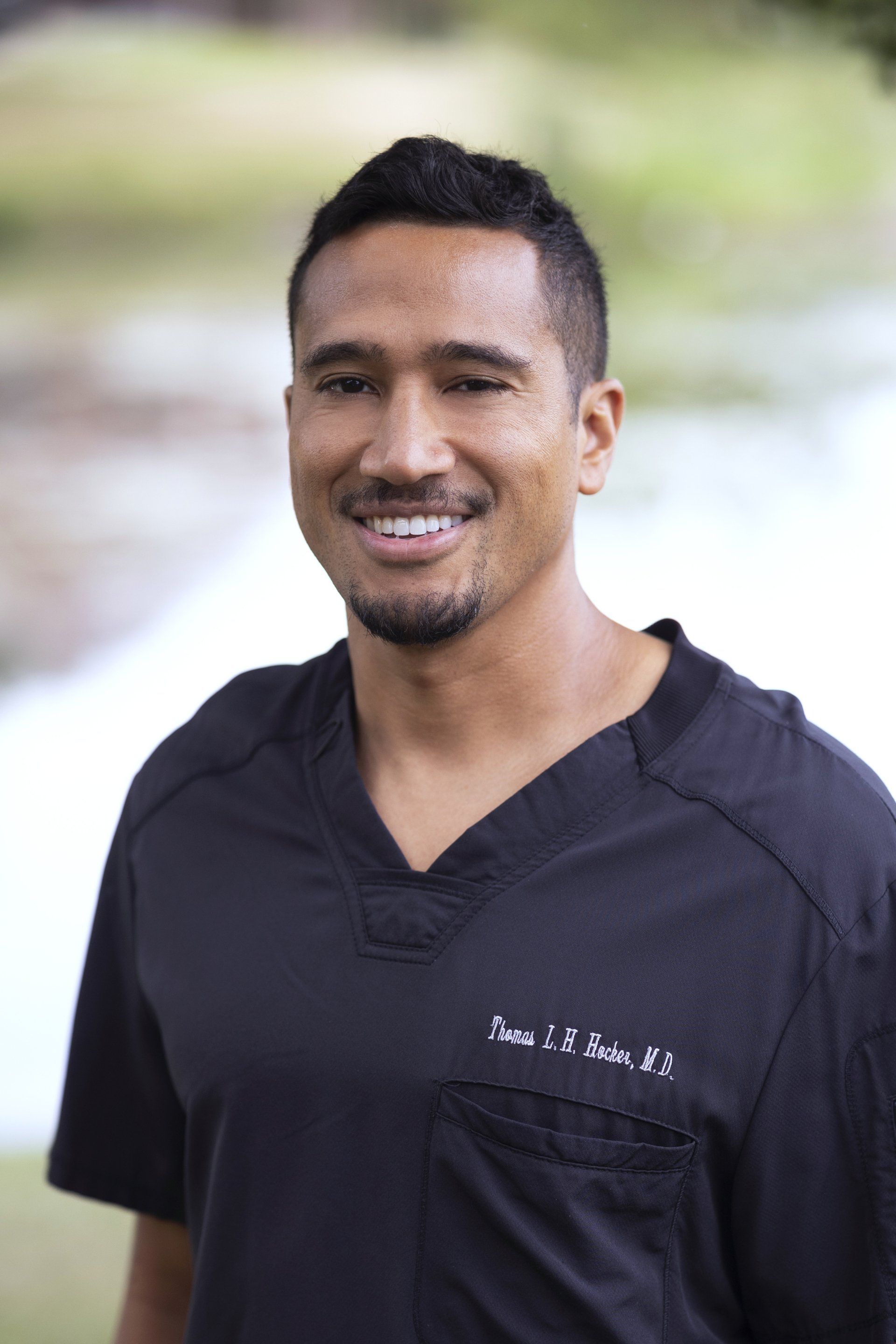
Thomas Hocker, M.D. is a triple board-certified dermatologist, dermatopathologist, and Mohs micrographic surgeon at Advanced Dermatologic Surgery in Overland Park, Kansas. He graduated from Yale University, where he studied biology, and received a Churchill Fellowship to study organic chemistry at Cambridge University in England. He attended Harvard Medical School, where he conducted melanoma research under Dr. Hensin Tsao, a world leader in melanoma genetics.


Dr. Hocker completed his internship at Santa Clara Valley Medical Center (Stanford-affiliated), followed by dermatology residency at Mayo Clinic. He pursued subspecialty training with a dermatopathology fellowship at the University of Michigan—home to one of the world's largest melanoma specialty centers—where he developed expertise in rare tumors. He then completed a second fellowship in Mohs micrographic surgery and facial reconstruction at Mayo Clinic under Dr. Clark Otley, receiving specialized transplant dermatology training.


Dr. Hocker has performed over 23,000 Mohs surgery cases and serves as founding division chief of dermatologic surgery at the University of Missouri-Kansas City and University Health. He is an active member of the International Transplant Skin Cancer Collaborative (ITSCC) and will be a key lecturer at the 2026 American College of Mohs Surgery national meeting.


He has been recognized as a Castle Connolly Top Doctor (2024, 2025) and received the Ingram's Top Doctor Award in 2025.

Schedule a Consultation
Doctor using a dermatoscope to examine a patient's arm, checking for skin irregularities.
By evos Consulting December 29, 2025
Learn why organ transplant recipients face a higher risk of skin cancer and what your transplant team may not have explained. Discover warning signs, prevention tips, and how to protect your skin after transplant.
Person in gloves holding a scalpel, medical tools on a table covered with white paper.
By Micah Flint December 16, 2025
Discover what surgical dermatology is and how Advanced Dermatologic Surgery in Overland Park, KS provides expert Mohs, reconstructive, and skin cancer surgery.